Plastic Surgery in Korea for North American Patients: How the Process Works
From the first message to the follow-up eight months later — the online consultation, whether you need a medical visa, what changed for foreign patients in 2026, and where the process most often goes wrong.
Most guides to having surgery in Korea describe the destination. Very few describe the process — the actual sequence of decisions, documents, and dates between deciding you are interested and sitting in your own living room with the stitches out.
This is that sequence, written for someone flying from North America. It is long because the process is long. The parts people get wrong are almost never the surgery; they are the booking order, the follow-up gap, and the assumption that a medical visa is required when for most Americans it is not.
Before anything: the question that sets the whole timeline
Not "which clinic." How many consecutive days can you actually be away from home?
Everything downstream is determined by that number — which procedures are open to you, whether you can do a combination, whether the high-risk window happens in Seoul or over the Pacific. Patients who choose the procedure first and then try to compress the stay to fit their leave are the ones who end up managing a complication by email. Our recovery timeline guide gives the real day counts by procedure; settle this before you speak to anyone.
If you have not yet settled on the procedure itself, start with which operations are actually worth traveling for — several of the most-searched ones are not.
Step 1 — The online consultation
Nobody flies to Korea to find out whether they are a candidate. The assessment happens remotely first, and a clinic that will not do this before you buy a ticket is telling you something.
What you send. Standardized photographs — usually front, both three-quarters, both profiles, and procedure-specific views — plus your age, height and weight, pregnancies and breastfeeding history where relevant, prior surgeries, current medications and supplements, smoking status, and any diagnosed conditions. For breast surgery, bra size and any imaging you have. For body contouring after weight loss, your highest and current weight, how long you have been stable, and whether the loss was surgical, pharmacological, or neither.
What you should get back. A specific surgeon's assessment of candidacy, the technique they would propose and why, the risks specific to your anatomy rather than a generic list, the required length of stay, and what they would decline to do. That last item is the most informative part of the reply. An assessment that proposes everything you asked for, with no reservations and no alternatives, was probably not written by a surgeon.
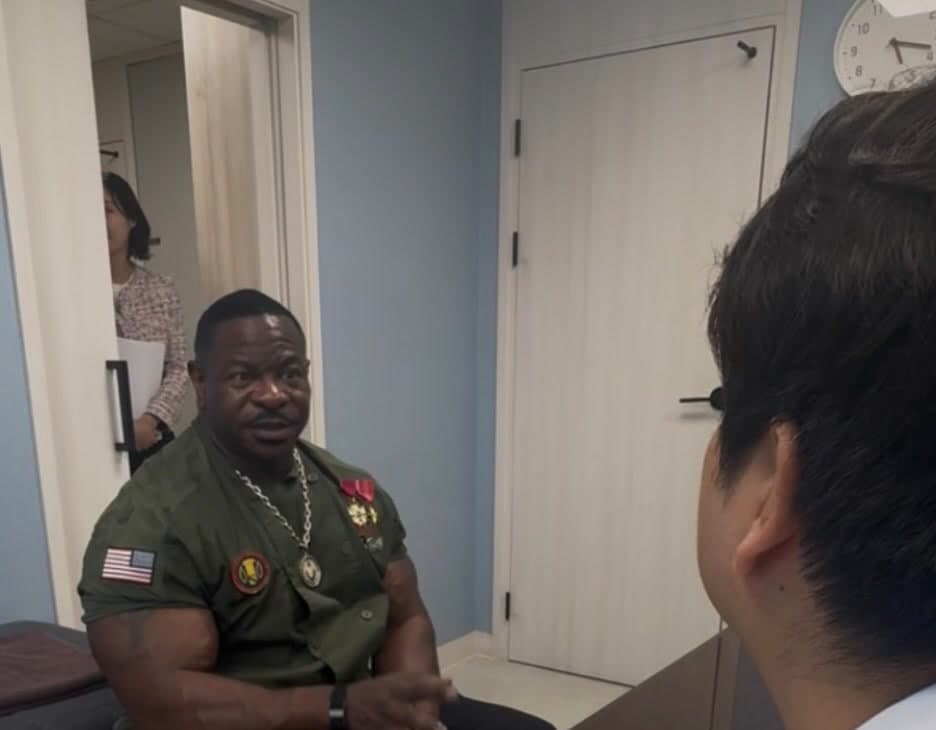
On language. Ask directly whether the surgeon speaks English or whether you will work through an interpreter, and if the latter, who employs that interpreter. An interpreter on the clinic's payroll is translating a sales conversation as well as a medical one. This is not an accusation of bad faith; it is a structural conflict, and the fix is simply having someone in the room whose obligation is to you.
Step 2 — Choosing, and getting it in writing
Verification belongs here, before any money moves. The full list is in our guide on verifying a Korean surgeon — the surgeon's Korean name and license number, specialty board certification rather than a general medical license, and six conditions to have documented before a deposit.
Two additions specific to arriving as a foreign patient:
- Ask for the institution's foreign-patient registration. Korea requires institutions and agencies that treat or recruit foreign patients to register with the Ministry of Health and Welfare, and registered institutions must carry medical malpractice liability insurance. This is checkable. Ask us for ours too.
- Establish the revision terms now, including whether a revision requires you to return to Korea and who pays for what. Almost every revision offer assumes you fly back. Decide whether that is acceptable while you still have the option of choosing differently.
Step 3 — Entry: you probably do not need a medical visa
This is where the most confusion sits, largely because a great deal of medical-tourism content is written for nationalities with entirely different requirements.
US passport holders can enter Korea visa-free for stays of up to 90 days, and Canadian passport holders for longer still. For a standard cosmetic procedure and recovery — which is measured in weeks, not months — that is normally the entire visa story. We confirm the current rule for your passport and your dates before you book anything.
The medical visa categories exist, and they are the right answer for some people:
| Purpose | Typical use | |
|---|---|---|
| C-3-3 | Short-term medical treatment, up to about 90 days | Nationals who require a visa to enter at all; patients who want the medical designation for documentation |
| G-1-10 | Long-term medical treatment, beyond 90 days | Multiple staged procedures or an extended recovery; requires sponsorship from the treating institution and considerably more paperwork |
Both require supporting documents from a registered Korean medical institution. Neither is normally necessary for a visitor having a single procedure with a two-to-three week stay.
What you do still need, and what people miss:
- K-ETA. The electronic travel authorization is currently waived for US and Canadian passport holders, and that waiver is scheduled to run through the end of 2026, with the requirement returning on January 1, 2027. The waiver has been extended more than once, so if you are traveling near that boundary, check the official position rather than this page — an out-of-date blog post is not a defense at the gate.
- The e-Arrival Card, submitted online shortly before you travel. Free, quick, and separate from K-ETA.
- Passport validity comfortably beyond your return date, and a return or onward ticket.
Confirm all of this with the Korean consulate or the official immigration portal close to your departure. Entry rules change on political timelines, not editorial ones.
Step 4 — What changed for foreign patients in 2026
One thing has changed that most existing English-language guides have not caught up with.
The VAT refund for foreign patients on cosmetic and aesthetic procedures ended on January 1, 2026. For years, international patients could reclaim value-added tax on cosmetic treatment through a refund program; the Korean government declined to extend it, and procedures paid for or performed from the start of 2026 are no longer eligible.
The practical consequence is narrow but real: any budget you built from a guide written in 2025 or earlier is missing that amount, and any clinic still advertising the refund is working from stale material. Ask what a quotation includes, and treat the tax question as settled rather than pending.
Step 5 — Booking, in the right order
The order matters more than the choices.
- Surgery date confirmed with the surgeon — not the clinic's coordinator, the surgeon's own schedule.
- Pre-operative testing date, usually one to three days before surgery. Blood work, ECG, imaging as required. Build this into the trip; it is not a formality and results occasionally change the plan.
- Accommodation, booked in two blocks: the immediate post-operative days close to the clinic, then the remainder. Trying to do this as one booking usually means either overpaying for the whole stay or being too far away in the week that matters.
- Flights last. The return flight in particular. Book it only once the surgeon has confirmed the required stay, and book a fare you can change, because the clearance to fly is a clinical decision made near the end of your stay, not a date you set in advance.
Plan for a companion for the first five days after a major procedure, and if you cannot bring one, say so at the consultation stage rather than on arrival. It changes what a responsible surgeon will agree to do.
Step 6 — In Korea
Arrival. Arrive at least two days before pre-operative testing. Long-haul swelling, jet lag, and dehydration are not the state in which you want your baseline measurements taken.
Pre-operative testing. Bloods, ECG, and any procedure-specific imaging. Bring a written list of every medication and supplement — including anything you stopped, and when.
The day before. Fasting instructions, and the final planning consultation. If anything about the plan has changed from the written agreement, this is the moment to say so.
Surgery day. Meet your surgeon in the pre-operative area, before anesthesia, with your interpreter present. Confirm out loud that this is the person operating, and that they are the one making the surgical markings. This takes ninety seconds and closes most of the ghost-surgery gap on its own.
The days after. Dressing changes, drain management where applicable, suture removal, and the clearance-to-fly assessment. Each of these is a real appointment, and the sequence is why the stay is as long as it is.
Before you leave, collect the paperwork. This is the single most-skipped step in the entire process:
- The operative note, in English if the clinic can produce one.
- Device details for any implant — manufacturer, model, size, serial number — on a card you keep.
- A written aftercare protocol with dates, not "follow up as needed."
- Prescriptions and their generic names, since brand names do not transfer.
- A direct contact for the surgeon's team, and their expected response time from a US time zone.
Step 7 — The eleven months after you land
The flight home is the midpoint, not the end. Surgical recovery is managed for roughly a year, and this part of the process is where distance actually costs something.
Line up a US physician before you fly — someone who has agreed in advance to see you for routine post-operative issues. A surgeon who did not operate on you is under no obligation to take you on, and a fair number decline. Arranging this from a waiting room in month three is the position you are trying to avoid.
Expect scheduled remote check-ins with the Korean team, photographs at defined intervals, and a plan for who you contact first when something looks wrong at 2am Eastern. Ask what that plan is before you need it.
If something goes wrong
Three things exist and are worth knowing before you need any of them.
- The clinic's own complication and revision policy, which you should already have in writing from Step 2.
- Mandatory malpractice liability insurance carried by registered institutions.
- K-MEDI, the Korea Medical Dispute Mediation and Arbitration Agency, which handles medical disputes including those brought by foreign patients and targets resolution in roughly 90 to 120 days.
None of these is a substitute for choosing carefully. All of them are substantially better than the recourse available in most medical-tourism destinations, and they are a reasonable part of the comparison when you are weighing Korea against somewhere cheaper.
Where this usually goes wrong
In order of how often we see it:
- The stay was set by leave, not by healing. Everything else follows from this one.
- The return flight was booked before the surgeon confirmed the stay, so a clinical decision ends up being made by a change fee.
- No US physician was arranged in advance.
- The operative note and implant details were never collected, and the patient discovers this at month four, from another continent, in a different language.
- The revision terms were never read, so a "free revision" turns out to require a second trip nobody budgeted.
Every one of those is a scheduling or paperwork failure, not a surgical one. They are also all preventable at the stage where you are still reading rather than booking, which is presumably where you are now.
Next, read how safe surgery in Korea actually is — including the risk this page has been circling, which is not the operating room.
Keep reading
- Korean Plastic Surgery Procedures: What Korea Is Genuinely Better At — and What It Is Not
Korea is not uniformly better at plastic surgery. It has unusual depth in a specific set of operations and no particular advantage in others. Which is which, and the test for whether a procedure is worth a flight at all.
- Is Plastic Surgery in Korea Safe? An Honest Answer for Overseas Patients
What Korean law actually regulates, what it does not, and the risk almost nobody writes about — which is not the operating room in Seoul but the eleven months of aftercare that happen after you fly home.
This guide is general information for people researching treatment abroad. It is not medical advice and does not establish a patient relationship. Only a licensed surgeon who has examined you can say whether a procedure is appropriate for you.